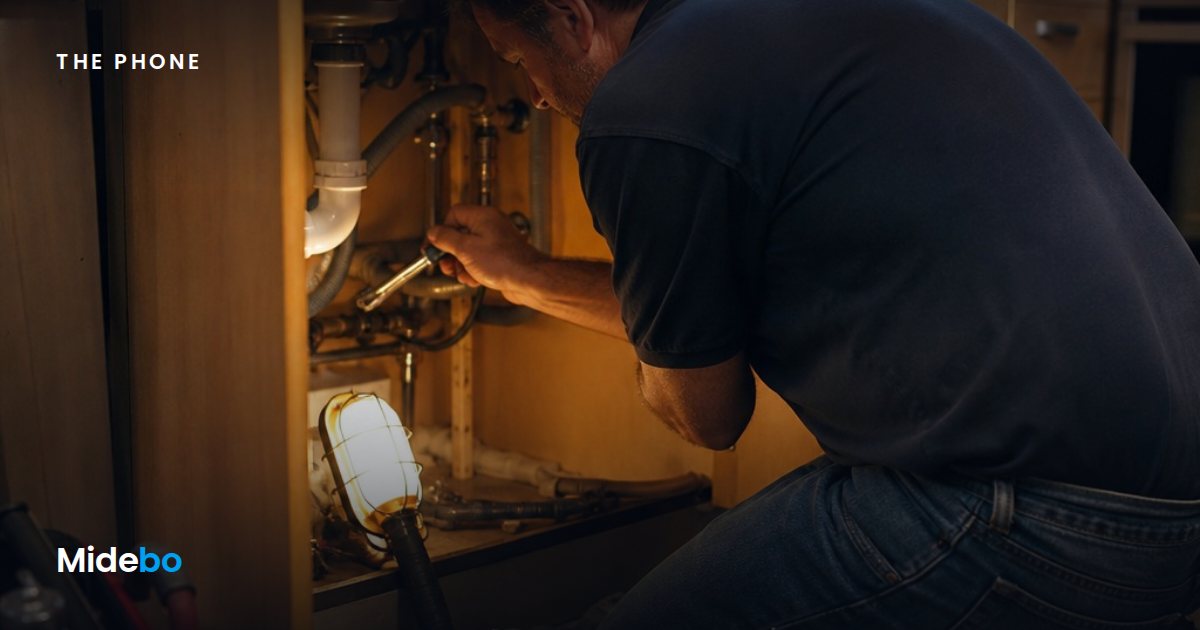
Every plumber in the St. Louis area knows the calendar. The first hard freeze in December lights up the phone with split hose bibs and frozen supply lines in unheated crawlspaces. The first heavy spring rain brings sump pits and basement floor drains. Late summer brings water heaters that quit because they were installed the last time somebody panicked and bought whatever was on the shelf.
Those calls do not arrive between eight and five. They arrive at 9:40 on a Sunday night, and the homeowner is standing in two inches of water with a phone in one hand, working down a list of names.
Here is how to sort which of those calls gets you out of bed, what to ask before you decide, and how to keep the phone covered without living on it.
The calls that will not keep until morning
Three situations genuinely cannot wait, and they have nothing to do with how upset the caller sounds.
Water that is still moving and cannot be shut off. A burst supply line, a failed water heater tank, a cracked line behind a wall. Every minute costs drywall and flooring.
Sewage coming up inside the house. A main line backup that is pushing waste out of a basement floor drain or a first floor toilet is a health problem and a damage problem at the same time. That is different from one slow tub.
Water meeting electricity. Anything running toward a panel, a furnace, a water heater burner, or floor outlets in a finished basement.
Almost everything else can be scheduled for morning if you tell the caller how to stabilize it tonight. A dripping angle stop, a single slow drain, a toilet that runs, a water heater with no hot water but no leak. Those are real jobs. They are just not midnight jobs, and saying so honestly buys you trust.
What to ask when somebody says leak
The word leak covers everything from a sweating fitting to a ruptured main. Six questions sort it out, and they work whether you are asking them yourself or somebody is asking them for you.
Is water moving right now, or did it stop on its own? Water that stopped on its own usually means a drain, not a supply.
Can you get to the main shutoff, and is it turning? In a lot of older St. Louis city and inner county houses the main is on the front wall of the basement near the meter. In slab houses out in St. Charles and Jefferson County it may be in a garage wall or at a curb stop in the yard. Walk them to it. A caller who shuts the main off turns an emergency into a morning appointment.
Where is the water showing up, and what is directly above it? A wet ceiling under a second floor bathroom is a very different truck load than a wet slab.
Is the water clear or dirty?
Is it near the panel, the furnace, or any outlet?
How long has it been going? A ceiling stain that grew over two weeks is not the same call as a line that let go twenty minutes ago.
What to ask when somebody says backup
For backups, one question does most of the work: how many fixtures are affected?
One toilet, one sink, one tub is a branch line. All of them, or the lowest fixtures in the house, is the main. If the toilet gurgles when the washing machine drains, that is the main talking to you.
Then ask whether there is a cleanout, inside near the front wall or outside in the yard, and whether they can find it. Ask whether this has happened before and how often. A house on an old clay lateral with roots in it will back up on a schedule, and the caller usually knows the schedule even if they do not know why.
Ask whether it has been raining. A sump pit overflowing in a Metro East or north county basement after a storm is a pump and a power problem. Sanitary backup is a line problem. Same wet floor, different truck.
Ask if anyone is running water, and tell them to stop. No laundry, no dishwasher, no showers until you get there.
Out past Eureka and Pacific and through Franklin County, add one more: city sewer or septic? A septic tank that has not been pumped in years is a different conversation and sometimes a different contractor.
Covering nights and weekends without burning out
Decide in advance what you answer after hours, write it on one page, and stick it by the phone. Something like: moving water, sewage in the house, or water near electrical gets a callback tonight. Everything else gets booked for the next available slot with instructions for the night.
The point of writing it down is that everybody who picks up the phone asks the same questions in the same order. That is how electricians handle a burning smell versus a dead outlet, how garage door shops handle a door stuck open overnight versus a noisy opener, and how auto shops sort a tow from a check engine light. The trade changes, the discipline does not.
Then give the phone a plan for the hours you are not holding it. A rotation with another plumber you trust, a family member trained on the six questions, anything other than a voicemail greeting. A homeowner with water on the floor does not leave a message. They dial the next name.
Work out what those calls are worth to you
Skip anybody else's numbers. Use your own.
Pull your call log for the last thirty days and mark every call that came in before seven, after five, or on a weekend (there is a fuller worksheet in what your missed calls cost). Cross reference those numbers against your invoices. The ones with no invoice went somewhere else.
Then take your average ticket for a drain clear and your average ticket for a water heater swap out of last year's books, and multiply. That figure is what your after hours coverage is actually worth, and it is the only version of the math that applies to your shop.
Do that this week, before the next freeze fills up the phone.